You flush the toilet, the water rises instead of going down, and suddenly, a simple bathroom trip gets messy and stressful.
Most of the time, it’s too much toilet paper or a small clog in the bend of the toilet, blocking water from flowing properly.
The good news is you can clear out these minor blockages using a few safe DIY methods. But first, you must understand what type of blockage you’re dealing with, so you don’t waste time on the wrong fix.
In this guide, we’ll walk you through exactly what to do right away, how to unblock a toilet using simple methods, and the clear signs that tell you when it’s no longer a DIY job and you need a licensed plumber.
TL;DR
- DIY methods for simple clogs include using a flange plunger first, then a toilet auger if needed, or trying hot water with dish soap or baking soda and vinegar. Avoid chemical drain cleaners because they often don’t reach the obstruction and can damage pipes or leave harsh residue.
- When a blockage happens, immediately shut the flapper, lift the float, and turn off the isolation valve behind the toilet, then remove excess water from the bowl so it doesn’t spill onto the floor.
- Simple clogs sit inside the toilet (S-bend) and are usually caused by toilet paper or small items, and can be fixed at home. Deep blockages affect multiple drains and the main sewer line, showing signs like gurgling drains or outside overflow, and are not DIY.
- Call a licensed plumber if multiple drains are slow, you hear gurgling in other fixtures, the ORG is overflowing, there’s a strong sewage smell, the toilet keeps re-blocking, or nothing you try changes the water level.
- To prevent blockages, only flush the 3 Ps (pee, poo, and toilet paper); avoid wipes and solids; flush in stages; keep the lid closed; and ensure the cistern water level is correct.
First: Stop the Toilet From Overflowing
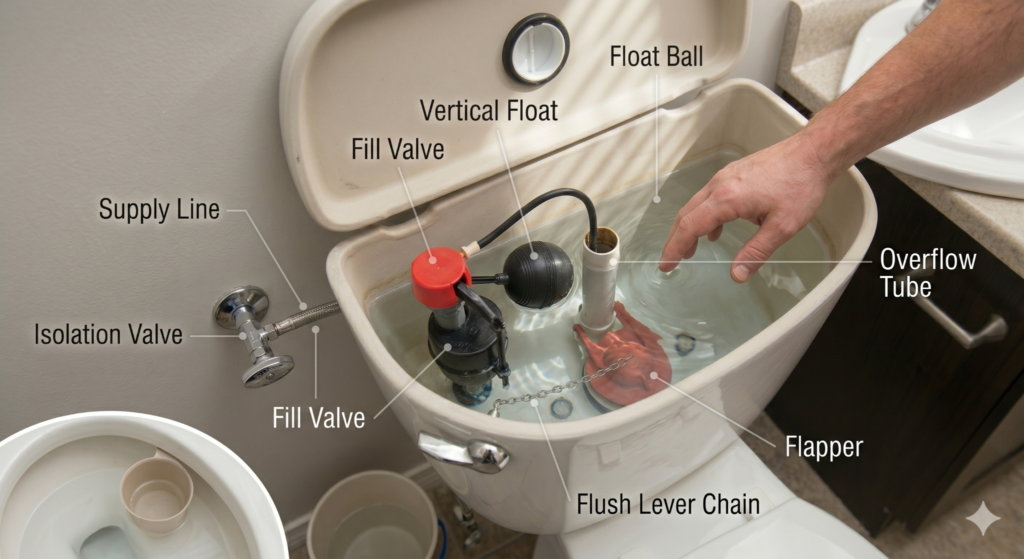
- Seal the flapper: Lift the lid off the toilet tank. At the bottom, you’ll see a rubber flap sitting over a hole – this is the flapper. When you flush, this flap lifts and lets water rush into the bowl. If it stays open, the bowl keeps filling. Reach in and press the flapper down firmly with your hand to seal the hole and stop water from flowing into the bowl.
- Lift the float: Now look for the float. It’s either:
- a plastic ball on an arm, or
- a vertical cylinder that slides up and down
The float controls the fill valve. As the tank fills, the float rises, and once it reaches a set height, it shuts off the water supply. If the water is still running, gently lift the float as high as it will go and hold it there. This forces the valve to close and stops more water from entering the tank.
- Close the isolation valve: Look behind or beside the toilet for a small tap on the wall (usually chrome or white). Turn it clockwise until it stops to shut off water from the main supply.
- Manage the standing water: If the bowl is already very full, use a small bucket or cup to scoop out some of the water and pour it into a nearby drain, like a shower or laundry sink. This lowers the water level so it doesn’t spill while you’re working.
Understand What Kind of Blockage You’re Dealing With
Before you try to fix anything, figure out what kind of blockage it is. This tells you how serious it is and whether you can handle it yourself or need an expert.
Most toilet blockages fall into two types:
1. Simple Clogs
A simple clog means the blockage is stuck inside the toilet itself, usually in the S-bend (the curved part inside the base of the toilet). This bend holds a bit of water to stop sewer smells from coming back into your bathroom, but because it’s narrow and curved, it’s the easiest place for things to get stuck.
Clogs happen because of:
- Overloading: When you flush too much toilet paper at once, the thick paper absorbs water, expands, and forms a soft plug that blocks the bend.
- Non-flushable items: Wet wipes (even flushable ones), paper towels, and sanitary products don’t break down, so they stay intact and get lodged in the pipe.
- Foreign objects: Things like kids’ toys, combs, or even a loose toilet rim block (the cleaning freshener that clips onto the rim inside the bowl) fall in by accident and get stuck in the bend.
How to spot a simple clog:
- Only the toilet is affected: Your sinks, shower, and bath are draining normally, which means the problem is limited to the toilet, not the whole system.
- Water rises and drains slowly: After flushing, the water level climbs high, then takes around 10–20 minutes to drain. This means the pipe isn’t fully blocked, but the opening has narrowed due to buildup, so water can only pass through slowly.
- No strange sounds or smells elsewhere: Everything else in the house is quiet and normal, which confirms the blockage hasn’t spread further down the pipes.
Because the issue is in the toilet, you can fix it yourself using basic tools.
2. Deep Blockages
A deep blockage means the problem is further down in your home’s drainage system, usually in the main sewer line that carries waste out of your house.
Deep blockages happen because of:
- Tree roots enter the pipes through small cracks, then keep spreading inside and start catching toilet paper and waste, which builds up into a blockage.
- Grease, waste, and debris stick to the pipe walls and narrow the space, so waste doesn’t move through properly and gets caught in this buildup and gradually forms a blockage.
- Cracked or collapsed pipes create uneven spots where waste collects instead of moving through, leading to a pipe obstruction over time.
How to spot a deep blockage:
- Multiple drains are slow or blocked: The toilet, shower, and sinks are all struggling to drain at the same time, which points to a waste build-up in the main line where all these fixtures connect.
- Gurgling sounds when you flush: You hear bubbling or glugging from the shower or floor drain after flushing. This happens when the blockage stops water from flowing properly, causing trapped air in the pipes to get pushed back and escape through nearby drains.
- Overflow outside (ORG spilling): You notice dirty water or sewage coming out of the grated drain outside your home, known as the overflow relief gully. This drain is designed to release wastewater outside if the main sewer line is blocked, so it doesn’t back up into your house. When it’s spilling, it’s a clear sign that the sewer line is under pressure and can’t carry waste away properly.
If you notice these signs, this isn’t something you can fix yourself because the issue is deep in the system and out of your reach. Also, under Queensland regulations, any work on sewer pipes must be carried out by a licensed plumber.
DIY Methods to Unblock a Toilet
If you’ve worked out that it’s a simple clog, you can clear it yourself using the methods below.
Method 1: Use a Toilet Plunger the Right Way
A plunger is the most effective way to clear a toilet blockage, but it only works if you use the right type to create a tight seal.
Always use a flange plunger and not a flat plunger when unblocking a toilet. A flat plunger, as the name says, has a flat base designed for surfaces like basins and sinks, so it will not sit and seal properly in the round and recessed toilet opening.
A flange plunger is made specifically for toilets. It has a soft rubber cup with an extra fold underneath that sits slightly inside the toilet opening to cover it completely and form a tight seal around the hole, so you can build enough pressure to move the blockage.
How to use it:
- Check the water level in the bowl. When you lower the plunger into the bowl, the water should come up at least halfway over the rubber cup and ideally cover it fully, so the plunger can push force through the pipe effectively.
- If you can still see most of the rubber above the water, add some water.
- If the bowl is too full and likely to splash when you plunge, remove a bit first.
- Run the plunger under hot tap water for about a minute to soften the rubber so it becomes more flexible. A softer cup molds better to the shape of the toilet outlet, which helps create a tighter seal.
- Place the plunger over the hole at a slight angle so the cup fills with water as you lower it.
- Now start plunging. Push down slowly to build pressure, then pull back firmly to loosen.
- After 5 to 6 strong strokes, lift the plunger away and watch the water.
- If it drains quickly, the clog has cleared.
- If the water still sits or drains slowly, repeat the process a few more times or try another method.
Method 2: Use a Toilet Auger for Stubborn Clogs
If the plunger doesn’t work, the clog is likely deeper or more solid, so use a toilet auger (also called a plumbing snake). It’s a long, flexible metal cable designed to reach deeper into the toilet trap and either break the blockage or pull it out.
How to use it:
- Place the curved end of the auger into the toilet bowl opening. This curved part is designed to follow the bend inside the toilet without damaging the porcelain.
- Hold the handle and start turning it clockwise slowly. At the same time, gently push the cable forward to feed the metal wire deeper into the toilet pipe.
- Keep pushing and turning until you feel the cable stop moving forward. The stopping point means you’ve reached the blockage inside the pipe.
- Now, continue turning the handle without forcing it to either break the clog into smaller pieces or let the cable grab onto it.
- After a few turns, slowly pull the cable back while still rotating the handle to bring any stuck material back up or clear it out of the pipe.
- Once the auger is fully removed, flush the toilet to check if the water flows down normally. If it still drains slowly or starts rising again, the obstruction hasn’t fully cleared yet and may need professional help.
Method 3: Try Hot Water and Dish Soap
This works well for clogs caused by toilet paper because the soap helps it slide, and the hot water softens it.
How to do it:
- Pour about half a cup of liquid dish soap into the bowl and let it sit for 10–15 minutes so it can reach and coat the clog.
- Fill a bucket with hot tap water (around 50–60°C). Please do not use boiling water (100°C), as it will be too hot and can crack the toilet bowl.
- Carefully pour the water from about waist height into the bowl, aiming towards the hole. The weight and force of the water help push the softened clog through.
Method 4: Use Baking Soda and Vinegar Carefully
This method works by creating a gentle fizzing reaction that helps loosen minor clogs, especially those caused by toilet paper.
How to do it:
- Pour one cup of baking soda into the bowl, then one cup of white vinegar. As they mix, the reaction starts bubbling and foaming, which helps break down and loosen the waste build-up inside the pipe.
- Close the toilet lid and leave it for about 30 minutes so the mixture can work through the blockage and break its grip on the pipe walls.
- After 30 minutes, pour a bucket of hot tap water (around 50–60°C) into the bowl to push the loosened material through the pipe and restore normal flow.
DIY Methods to Use With Caution
These are emergency options, so you only use them if you’re stuck without proper tools.
The Wire Hanger Trick
This is a homemade version of a plumbing snake that only works if the clog is sitting very close to the toilet opening, almost within reach.
How to do it:
- Take a wire coat hanger and straighten it out so it becomes a long piece of wire. Leave a small hook shape at one end to catch or break the clog.
- Wrap the hooked end with a cloth (like an old rag or towel) and tape it tightly, so the metal doesn’t scrape or scratch the porcelain surface.
- Slowly push the wrapped end into the toilet opening until you feel resistance. That resistance is usually the clog.
- Gently move the wire around to break up the obstruction or try to pull it back out.
Please know that if you push too hard, the clog can move deeper into the S-bend. And once that happens, a hanger won’t reach it anymore, and it becomes a plumber’s job, which takes more time and higher repair costs.
Wet/Dry Vacuum (Suction Method)
This method is only for cases where you know for sure that something solid is stuck in the toilet, like a toy, toothbrush, or small object, and you have to take it out.
How to do it:
- Remove as much water from the bowl as possible using a bucket or container.
- Place the vacuum hose a few centimetres into the toilet opening.
- Wrap a thick towel around the hose where it meets the bowl to create a tight seal so air doesn’t escape.
- Turn the vacuum to wet mode and switch it on. The suction can pull the object straight out of the bend and into the vacuum tank.
This only works with a wet/dry vacuum. A normal household vacuum isn’t designed for water, so it can damage the motor and even create an electrical hazard. Also, the vacuum can accidentally pull in sewer gases or spray dirty water everywhere if the towel seal isn’t tight, which can spread germs and create a health risk, making the situation messier and harder for you to clean up.
Avoid Harsh Chemical Cleaners
Most chemical cleaners are made for sinks, where hair and grease sit closer to the surface. In a toilet, the blockage is usually further down and already sitting in water, so the chemical doesn’t always reach it properly or break it apart.
These cleaners also create heat when they react inside the pipe. In older or worn plumbing, that heat can put stress on pipe joints and seals, which may lead to leaks or damage over time.
If the blockage doesn’t clear, you’re left with a bowl full of strong chemical water. That becomes a problem later because anyone working on the toilet has to deal with those chemicals first, and even small splashes can cause skin or eye irritation.
When to Call a Plumber
If you notice any of the signs below, it means the problem is deeper in the plumbing system, for which you need help from an expert.
- Nothing you try is working: If you’ve already used a plunger and an auger and the water level still doesn’t move, the blockage is likely solid or deep, such as compacted waste or tree roots.
- Toilet causes gurgling in other drains: If you flush the toilet and hear bubbling sounds in the shower or see water moving in the floor drain, it means air is trapped in the main sewer line. This shows the issue is further down at a point where all pipes connect.
- Everything in the house is draining slowly: If multiple fixtures like sinks, showers, and tubs are all slow at the same time, the problem is likely in the main sewer connection.
- Overflow Relief Gully (ORG) is spilling: Check the grated drain outside your home near the bathroom wall. If water or sewage is coming out of it, the main sewer line is full and pushing wastewater back out through the overflow point.
- Strong sewage smell in the bathroom or yard: A strong rotten or sulphur-like smell means sewer gases are escaping from the pipes because of a crack, blockage, or pressure build-up in the system.
- Water leaking at the base of the toilet: If you see water pooling around the bottom of the toilet, it often means the seal between the toilet and the floor (called the wax seal) has failed. This allows wastewater to leak into the floor area and can damage the subfloor if not fixed.
- Toilet keeps blocking again and again: If you clear the toilet and it keeps blocking every few days, the issue is not what you are flushing. There is a deeper problem in the pipe, such as tree roots growing inside or a dip in the pipe where waste collects.
A licensed plumber uses advanced tools like a CCTV drain camera to look inside the pipes and find the exact location of the blockage. They then use the appropriate solution to clear it properly, whether it’s breaking up tree roots, removing solid build-ups, or dislodging stuck objects, so the pipe is fully restored and flowing again.
How to Prevent Future Toilet Blockages
A few simple changes in your habits can save you from dealing with the same problem again.
- Stick to the “3 Ps” rule: Only three things should go down the toilet: pee, poo, and (toilet) paper.
- Don’t flush “flushable” wipes: Even though they are labelled flushable, they don’t break down like toilet paper. They stay intact in the pipe and clump together with waste, slowly building a blockage. It’s always safer to put them in the bin.
- Flush in stages: If you use a lot of paper, try a midway flush. Flush once, finish up, and then flush again. This stops a giant wad of paper from getting stuck in the S-bend.
- Bin the small stuff: Cotton buds, dental floss, and hair might seem small, but they don’t dissolve. Floss, in particular, acts like a net that catches everything else and creates a massive obstruction over time.
- Keep the toilet lid closed: This is a simple habit that stops objects like toothbrushes, combs, or kids’ toys from accidentally falling in. Hard objects like these often cause sudden, complete blockages.
- Make sure the flush is strong enough: Occasionally, check that the cistern water level is reaching the marked line inside the tank. If it’s too low, top it up by adjusting the float so the tank fills to the correct level. This ensures the flush has enough force to push waste properly through the pipe.
Final Thoughts
Toilet blockages are a very common household problem, and once they happen, the water has nowhere to go and can overflow onto your bathroom floor, which is why the first thing you should do is stop more water from entering the toilet.
Once the situation is under control, most minor and local clogs can be cleared with basic DIY methods like a plunger, hot water and dish soap, or a toilet auger. Never use chemical drain cleaners, as they don’t break down toilet blockages and can damage your pipes.
But if you’ve tried these DIY methods and nothing changes, or you start seeing signs like multiple drains slowing down, gurgling noises, or the overflow relief gully overflowing, then the problem is no longer just in the toilet. It’s most likely deeper in the main sewer line, and that’s where DIY stops working. At that point, your safest move is to get a licensed plumber to inspect and clear it properly.
If you’re in Townsville and dealing with a stubborn toilet blockage, our team at 1touch Plumbing can quickly diagnose what’s causing the issue and resolve it using professional equipment, so you do not have to deal with repeat blockages or hidden pipe problems.
Contact us today for reliable toilet fixes!
FAQs
How much does a plumber cost in Townsville to unblock a toilet?
Most plumbers charge around $100 to $300 for a simple toilet blockage, involving minor clogs that can be cleared quickly with basic tools.
For a deep blockage, the cost ranges from $350 to $600+ because the plumber might use a CCTV drain camera to find the blockage or a specialist clearing.
Emergency or after-hours visits (nights, weekends, and public holidays) are higher because they include urgent call-out fees and higher labour rates, as the plumber has to work outside regular working hours.
Is it safe to leave a blocked toilet overnight?
You can leave it overnight, but we do not recommend it.
The main risk is overflow. If someone accidentally flushes the toilet, or if the cistern slowly keeps releasing water due to a faulty seal, the bowl can overflow and spill onto your bathroom floor while you’re asleep.
In warm climates like Townsville, stagnant toilet water can start to smell quickly, and bacteria multiply faster when temperatures are above 30°C, which makes the bathroom unpleasant and unhygienic by morning.
If you have no choice but to leave it, keep the bathroom ventilated, turn on the exhaust fan, and close the toilet lid to prevent odours and bacteria from spreading. Also, turn off the isolation valve behind the toilet so no more water enters the system.
Can hard water cause toilet blockages?
Yes, it can contribute over time.
Hard water contains minerals like calcium and magnesium, and these can slowly build up inside the toilet. One area affected is the rim jets, which are the small holes under the toilet rim that spray water into the bowl when you flush.
When these jets get partially blocked, less water comes through during a flush. This makes the flush weaker, so waste doesn’t get pushed through the pipe properly, which can lead to more frequent blockages.
Cleaning the rim jets occasionally or using a mild vinegar soak can help keep the flush strong.