
Whether you can repair your hot water system’s leak or not comes down to what’s actually causing it. Some issues, like loose pipe connections or a worn valve, are quick and affordable to fix. Others, like a corroded or cracked tank, mean the system itself is failing and needs replacing.
In this guide, we’ll walk you through what to do as soon as you notice a leak, how to figure out what’s causing it, and how to decide whether a repair will do the job or if it’s time for a new system.
TL;DR
- Common causes of hot water leaks include loose pipe connections, worn TPR (safety) valves, dripping drain taps, sediment buildup, or corrosion inside the tank.
- When a leak happens, immediately turn off the power (electric or solar) or gas, shut the cold-water inlet, and use a bucket or towels to contain the water and prevent damage.
- Minor issues can often be repaired by tightening loose fittings, replacing worn valves, or clearing sediment, which is faster, cheaper, and keeps a healthy tank running safely.
- Replacement is the better option if the tank is over 10 years old, leaking from the bottom or through insulation, showing rusty water, or has a history of repeated leaks.
- Call a plumber immediately if you notice gushing water, hidden leaks behind walls or under floors, burning smells around electrical components, no hot water, or leaks near your switchboard.
What to Do Immediately When You Notice a Leak
- Isolate the Power or Gas Supply: This is the first and most important step to stop the system from heating while water is leaking, which can damage internal parts.
- For electric systems (including heat pumps): go to your main switchboard (usually on an outside wall, in a garage, or in a laundry room). Find the switch labelled “Hot Water”, “HWS”, or sometimes “Off-Peak” and flip it fully to OFF.
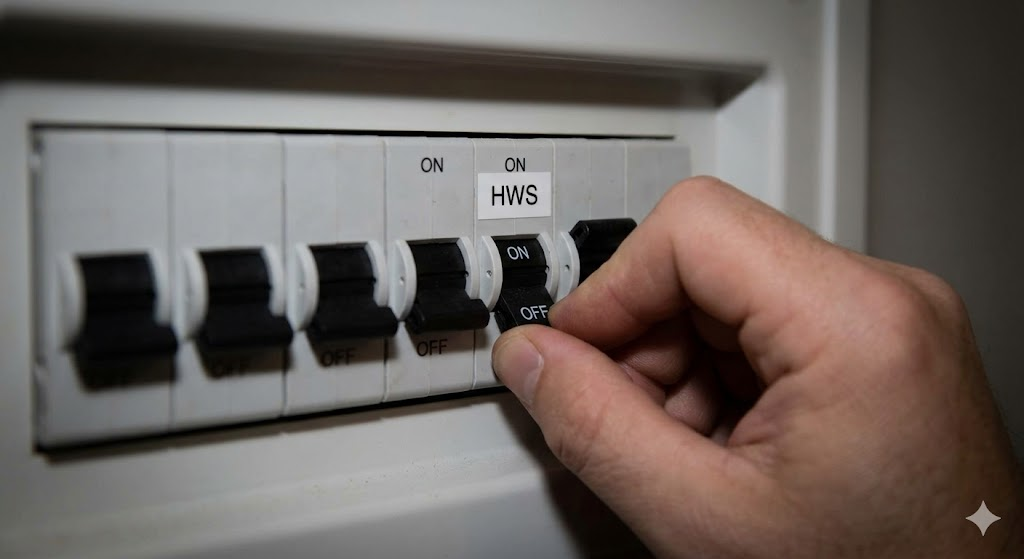
- For solar systems: switch off the power at the switchboard the same way. This turns off the electric booster (backup heater). If you can’t find a labelled switch, check near the tank for a small wall switch or isolator and turn that off.
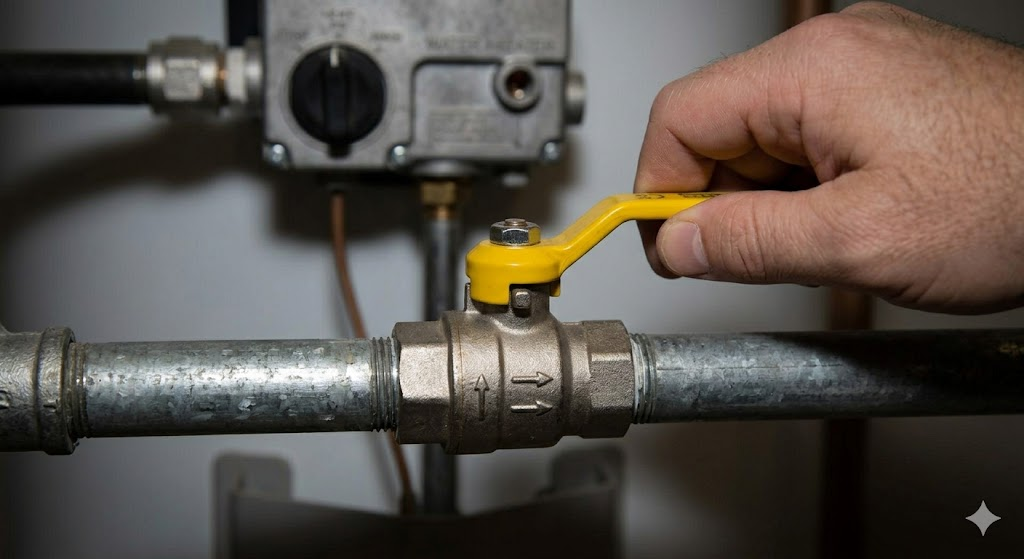
- For gas systems: look for the gas pipe going into your unit; there will be a small tap-like control on it, which is the gas valve. It usually has a flat lever or handle. Turn that lever a quarter turn (90°) so it sits across the pipe instead of along it. When it’s across, the gas is off.
- Shut Off the Water Inlet: Next, stop more water from entering the tank. Find the cold-water pipe connected to the bottom of the unit. Look for a valve on that pipe (it may be a round tap or a lever). Turn it clockwise (if it’s a tap) or move the lever until it’s firm and across the pipe. This stops the tank from refilling and limits how much water can leak out.
- Contain the Water and Protect the Area: Limit where the water spreads so it doesn’t damage floors, walls, or cabinets.
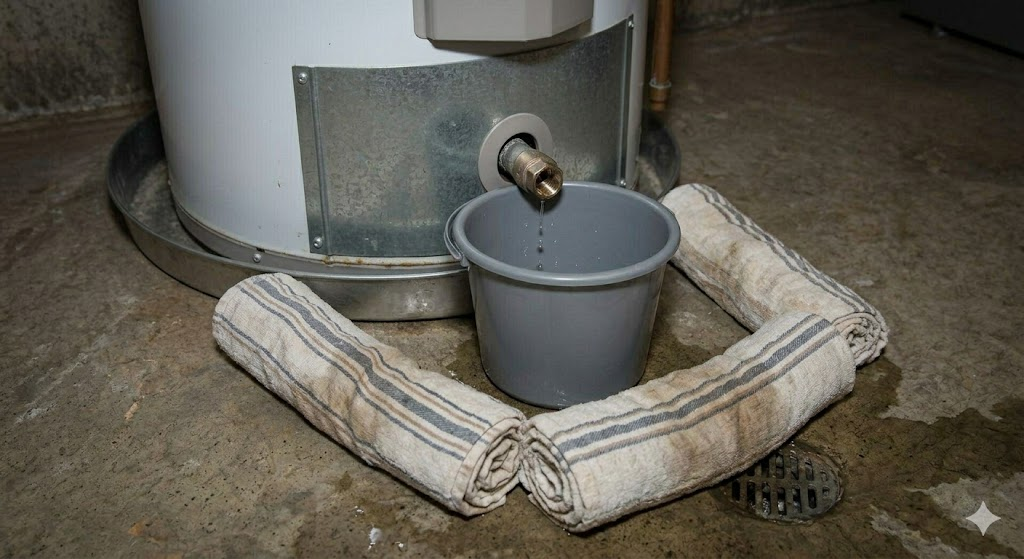
- Place a bucket or tray directly under the drip point to catch water at the source.
- If water is spreading, lay towels or rags in a line from the leak towards a safer spot (like a floor drain, doorway, or outside) so they absorb and channel the flow in one direction instead of letting it spread randomly.
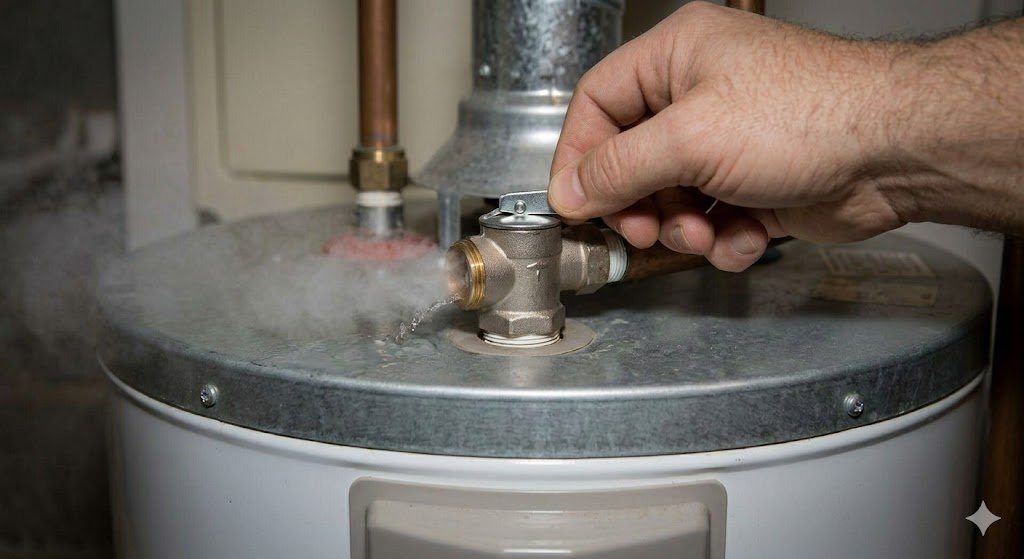
- Relieve Internal Pressure: Most hot water systems have a Temperature and Pressure Relief (TPR) valve, a safety device designed to release excess pressure and prevent the tank from bursting. You’ll find it near the top of the tank with a small lever and a pipe running down the side. Gently lift the lever for a few seconds and then let it close. This releases built-up pressure inside the tank, which can otherwise force more water out through the leak and make the situation worse.
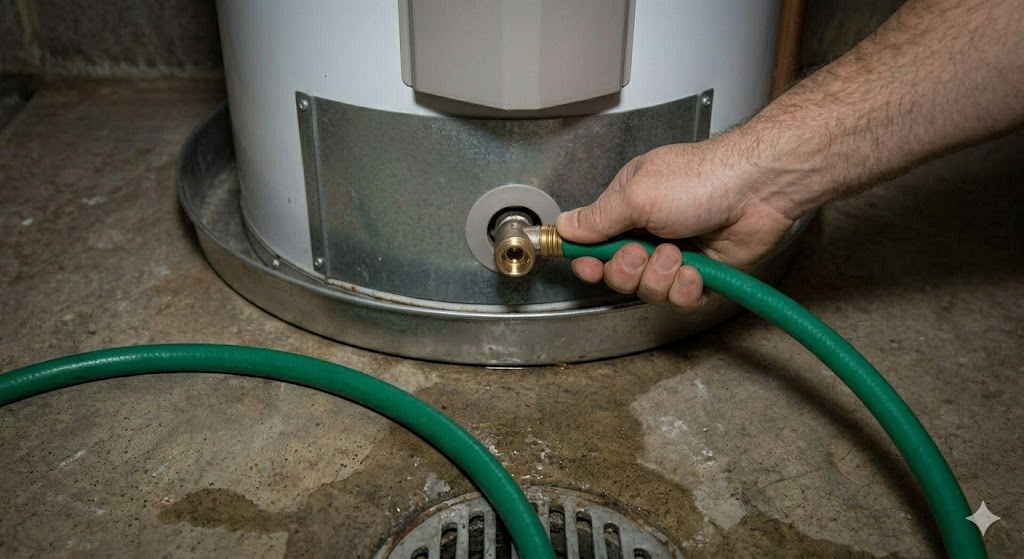
- Drain the Excess Water (If Needed): If the leak is steady or the hot water unit is indoors, you may need to drain some of the tank’s water to prevent flooding and serious damage to floors and walls. To drain safely, locate the drain outlet at the base of the tank, attach a standard garden hose, and run it to a floor drain, driveway, or lawn. Open the valve slowly and let the water flow out gradually.
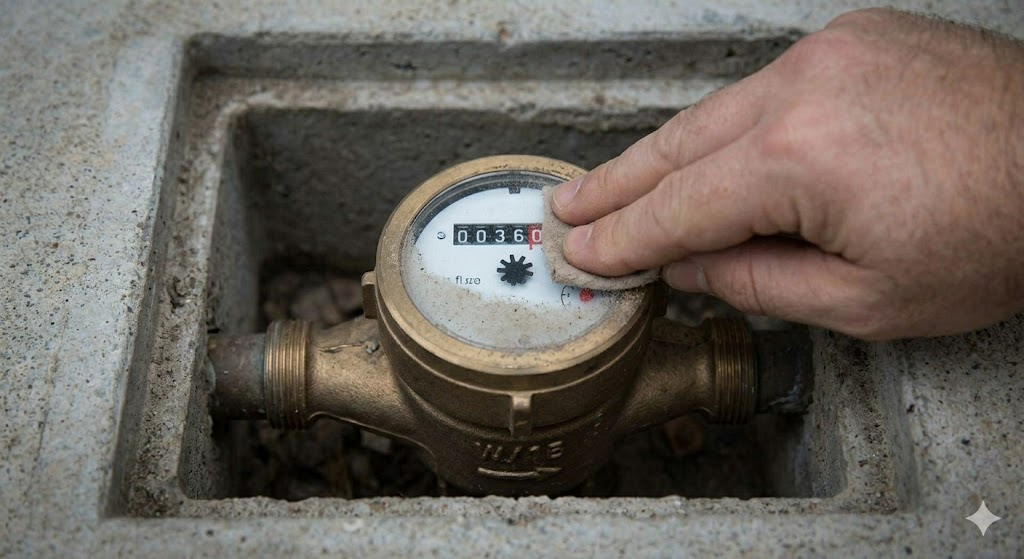
- Check Your Water Metre: After draining the tank, you need to confirm that the leak is under control. Make sure all taps in the house are turned off, then check your water metre. If the metre shows continuous movement, the leak hasn’t been fully contained, and you should call a licensed plumber immediately to ensure the problem is addressed safely.
How Leak Location Helps You Diagnose the Problem
Once things are under control, you can take a closer look at where the water is actually coming from. This is important because the location of the leak tells you two key things:
- What is likely causing it
- Whether it’s something you can repair or a sign that the system needs replacing.
Here’s what each location tells you:
Water Pooling at the Top
If water is pooling around the top of the tank, it mostly comes from the pipes and fittings attached to the tank’s top. These connections handle the flow of hot and cold water in and out of the unit, and if they become loose or the seals wear out, water can escape. Because these components are external and easy to access, leaks here are generally minor and fixable.
Water Running Down the Side
When water runs down the side of the tank, it usually comes from safety valves attached to the side. These valves are designed to release water if the pressure or temperature gets too high.
If the valve starts opening more often or keeps dripping, it can mean the valve is worn out, or the system is under constant stress, like high incoming water pressure or overheating. The plumber will check what’s causing the valve to open and fix it accordingly.
Water Seeping from the Bottom
When water pools at the base of the tank, it means the leak is coming from inside the tank itself. Most tanks have a drain point near the bottom, and if water is only leaking from this tap, it’s a replaceable part.
But if water is seeping from behind the metal casing or through the insulation at the bottom, the inner cylinder has likely corroded or cracked, which is not something you can patch up, and the tank itself has failed and needs replacing.
Common Causes of a Hot Water System Leaking
Now that the leak’s location has given you a clue, it’s time to figure out what’s actually causing it and how to check for sure.
Loose Inlet or Outlet Pipe Connections
The pipes going in and out of your tank are one of the most common places for leaks to start. These joints are sealed with threaded fittings and small rubber washers that keep the connection watertight.
Over time, the metal fittings made of copper or brass expand and contract as the water heats up and cools down. This repeated movement slowly loosens the connections. The flow of water also causes small vibrations, which weaken the joint even more. On top of that, in North Queensland, constant heat and humidity can dry out and harden the rubber washers, so they don’t seal properly anymore.
Once that seal weakens or the fitting loosens, water starts to escape.
How to Confirm:
Wipe the tank and pipe connections dry with a cloth. Wait 10–15 minutes, then check for fresh droplets at the joint. If the water appears at the pipe but the tank surface stays dry, the leak is likely from the connection.
Faulty Temperature and Pressure Relief (TPR) Valve
The TPR valve is a safety device located on the side of the tank near the top. Its job is to release a small amount of water if the pressure or temperature inside the tank exceeds the safety limits of around 500 kPa or 99°C, as set by Australian standards.
A few drips during the heating cycle are normal. That’s because when water heats up, it expands, which slightly increases pressure inside the tank. The valve releases a bit of water to relieve that extra pressure and keep the system safe.
But if you notice a steady drip or a constant stream, something isn’t right. This can happen when:
- Mineral deposits from Townsville’s hard water build up inside the valve, stopping it from sealing properly.
- Water pressure is consistently high, forcing the valve to open more often than it should.
How to Confirm:
Take a look at the tundish, the small drain pipe running down from the valve. If water is flowing steadily, gently lift the small lever on the valve for a few seconds to flush out any dirt or mineral bits.
Then let the lever close.
- If the dripping stops, it was just debris that was blocking the valve from closing properly.
- If the dripping continues, there are two possibilities:
- The valve is worn and not sealing properly.
- Your water pressure is consistently high, forcing the valve to stay open.
To check your water pressure, you can attach a simple pressure gauge to an outdoor tap or the cold-water inlet of the tank. Most homes should be around 400–500 kPa.
- If it’s higher than that, the valve is fine and may just be releasing water to relieve the excess pressure. You need to install or adjust a pressure-reducing valve on your water supply to bring pressure down to a safe level.
- If the pressure is normal and the valve still drips, it is likely worn out and is causing leaks.
Leaking Drain Valve
The drain valve is the small tap at the bottom of your tank, mainly used for maintenance and flushing. Over time, especially in older tanks, it can start to leak because the valve’s components – plastic or brass – wear out, or sediment and mineral buildup from the local water get stuck inside, stopping them from sealing properly, which eventually causes leaks.
How to Confirm:
Take a look at the base of the drain tap. If you see a steady drip or a small puddle or notice white, chalky limescale around the opening, the valve isn’t sealing anymore.
Sediment Buildup and Internal Wear
Inside your hot water tank, there’s a sacrificial anode, which is a metal rod that absorbs minerals from local water and slowly corrodes to protect the tank. But if this rod is worn out, minerals in your water (like sand, calcium, and grit) sink to the bottom.
Over time, they form a layer of sediment. The heating element sits just above or embedded in this layer, so the heat it produces doesn’t transfer efficiently into the water. That means the metal directly under the element (the tank base) takes the brunt of the heat because the sediment doesn’t conduct the heat well. Over months and years, this constant extra heat weakens the steel, and eventually the base can crack, causing a leak.
How to Confirm:
When your tank heats up, listen closely for popping or rumbling noises, like a kettle or popcorn. These sounds come from steam bubbles forming under the layer of sediment at the bottom. The bubbles push against the sediment and metal, creating that rumbling noise, which is a clear sign your system is under stress.
Corroded or Damaged Tank Interior
The hot water tank is a steel cylinder. To stop this steel from rusting, the manufacturer lines it with glass enamel and adds a sacrificial anode to keep your tank safe from the local hard water.
Over time, usually around 5–10 years, the anode gets used up. Once it’s gone, the steel is exposed to minerals in the water, which damage it. Moreover, in Townsville, most tanks are installed outdoors, where they’re exposed to humid, salty coastal air and harsh sunlight. These conditions wear down the protective enamel and steel faster than in drier areas, which makes leaks much more likely over time.
How to Confirm:
Check the water around the base of your tank. If it’s brown or rusty, or if you notice water seeping out from under the insulation, that’s a sign the steel inside the tank is corroded, and the tank is leaking from the inside.
Can You Repair It, or Is It Time to Replace It?
Now that you know what’s causing the leak, it is time to decide whether it’s worth fixing your hot water system or if it’s time for a new one.
Problems That Are Often Repairable
- Leaks at the fittings or joints: If water is only seeping from the pipe connections at the top, it’s mostly just loose fittings or worn seals. A plumber can replace the washers or seals and tighten the connections, which typically costs around $150–$250.
- Leaking TPR (safety) valves: These valves release water if pressure or temperature gets too high. Swapping the valve is simple, fast, and much cheaper than replacing the whole tank.
- Minor drain valve leaks: If the tap at the bottom of the tank is dripping, it’s often just the valve that’s worn or clogged with sediment. Replacing the valve fixes the problem without touching the tank itself.
Signs Replacement is the Better Option
- The tank itself is leaking: If water is coming from the bottom, behind the metal casing, or through the insulation, it means the tank itself is failing.
- The tank is over 10 years old: Most hot water tanks last around 8–12 years. If yours is over 10, the metal inside is likely weakened, and corrosion may have already started.
- Rusty or brown water: If your hot water is brown or rusty, or you see rust around the base of the tank, that’s a clear sign the steel is corroding from the inside out. The lining has failed, and once this happens, patching it isn’t practical, and the tank is done.
- Frequent leaks or repeated plumber visits: If you’ve had multiple plumber visits in the last year for different leaks, that’s a clear sign you need a new, energy-efficient tank. More often than not, it’s cheaper and way less stressful than constantly paying for repairs.
Whatever you choose – repair it or replace it – don’t wait around. Even a tiny leak can quickly turn into a big mess, ruin your floor, or leave you without hot water when you need it most. The faster you tackle it, the less stress, the smaller the bill, and the sooner you’re back to worry-free hot showers.
If you are confused, reach out to us at 1touch Plumbing. We’d be happy to assess your tank and inform you on the best way forward.
When to Call a Plumber Right Away
If you notice any of these warning signs, call a plumber immediately:
- Water is gushing, not dripping: A steady stream from the tank or pipes means you’re losing hundreds of litres every hour. In fact, a big leak can waste over 7,000 litres a day, which will send your next water bill through the roof.
- The leak source is hidden: You might hear running water or see damp patches on walls while the tank itself looks dry. This might mean there is a leak in pipes inside the walls or under a concrete slab. If left alone, the water can weaken the slab, erode concrete, or even damage your foundations.
- Electrical scorching / burning smell: If you notice a burning smell, smoke, or charred plastic near the electrical cover (the plate over the heating element and wiring), it usually means water has reached the electrical parts. This is dangerous because water and electricity can cause a fire or serious injury.
- Discoloured or rusty hot water: If your hot taps are running brown, red, or muddy water while the cold is fine, it means the steel inside the tank is corroding. When this happens, the tank can suddenly rupture or burst because it can no longer hold the water safely under pressure.
- No hot water and a leak at the same time: If your taps stop producing hot water and you notice a puddle around the tank, it means the leak has reached the heating element or thermostat, which are electrical components. Water makes the element unsafe, so it stops heating, which is why you have no hot water. This is dangerous to touch, as water and electricity together can injure you.
- Water leaking near your switchboard: If your hot water system is close to your main electrical panel and water is running towards it, this is an emergency. Water can short-circuit the wiring, damage your home’s electricity, or even cause a fire.
A plumber will safely turn off the water and power, track down the leak, and fix or replace the faulty parts, so your home stays protected, and your hot water comes back reliably, without the stress or risk of doing it yourself.
A quick heads-up: Whenever there’s an electrical issue with your hot water system, you need a plumber with a restricted electrical licence. It means they’re specifically trained and legally allowed to disconnect, repair, or replace the electrical components of a hot water system. If your plumber doesn’t have this restricted licence, you will need a fully licensed electrician.
Final Thoughts
When you notice a hot water leak, the first thing to do is to turn off the power or gas, then shut off the water supply, and catch any dripping water to contain the damage.
Once things are under control, take a quick look at where the water is coming from. The location reveals the likely cause. As we’ve covered in this guide, some problems are quick and easy to fix, while others mean the tank is near the end of its life.
Once you have a general idea of what’s happening, call a licensed plumber right away. They can confirm the exact issue and guide you on the right next steps.
For Townsville homeowners, 1touch Plumbing is the team they can trust. Our experts will stop the leak, pinpoint the cause, and handle the repair or replacement correctly, so you can avoid further damage, stay safe, and get back to enjoying reliable hot water.
Contact us today to keep your home safe and dry!
FAQs
Is it normal for my hot water system to drip a little?
Yes, just a tiny drip is actually normal. A temperature and pressure relief valve lets out a small amount of water (about a cup a day) while the tank heats up. This is just the system doing its job, managing the natural expansion of water.
But if the dripping doesn’t stop or turns into a steady stream, that’s a sign something’s wrong – either the valve is faulty, or your water pressure is too high – and it’s time to call a plumber to check it out.
How much does it typically cost to fix a leak in Townsville?
It depends on what’s wrong. Small fixes, like swapping a worn valve or tightening a loose pipe, cost between $150 and $350 for parts and labour.
If your whole tank needs replacing, a standard gas or electric storage unit in Queensland generally runs $1,500–$3,500 installed, including taking out the old one. Heat pumps or solar systems can cost more, depending on how tricky the installation is.
Can I still use my hot water if there’s a small leak?
You might be able to keep using it for a little while, but even a tiny drip can waste hundreds of litres and slowly damage your floors, walls, or cupboards. In Townsville’s humid weather, it can also lead to mould. The safest thing to do is to catch the drips in a bucket and call our plumber to check it before it turns into a bigger problem.